Planet Formation at MSSL/UCL
Members
Doctoral Researchers
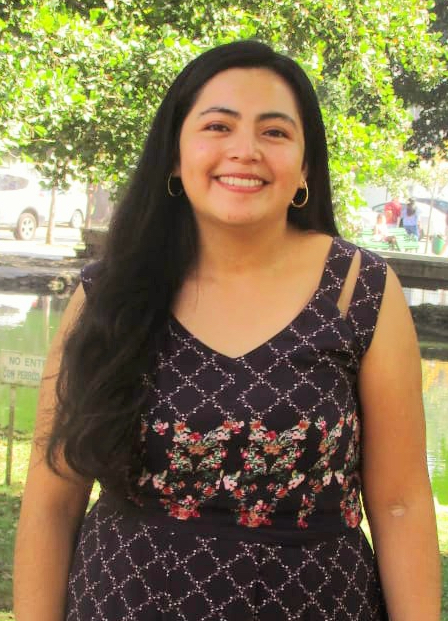
Juanita Antilen (she/her), 2023-2027
From: Chile
If you are looking for PhD opportunities in our group, visit our MSSL webpage. Please do not hesitate to contact me if you have any questions. All the post-doctoral researchers of this group are funded by the UK Research and Innovation (UKRI) under the UK government’s Horizon Europe funding guarantee from ERC (under grant agreement No 101076489)
Juanita's PhD project focuses on the physical mechanisms that rule the evolution of protoplanetary disks by combining observations from VLT/SPHERE (e.g. from the DESTINYS survey) and ALMA. We aim to search for observational trends from scattered light observations as the ones obtained from millimeter observations (such as the disk size-luminosity relation and the disk dust mass and stellar mass relation). For this purpose, we compare our observational results to radiative transfer models accross a large range of parameters. Additionally, this unique combination of observations is giving us the opportunity to constrain the dust vertical turbulence in protoplanetary disks, which can be a key parameter for the formation of pebbles and planetesimals in disks.
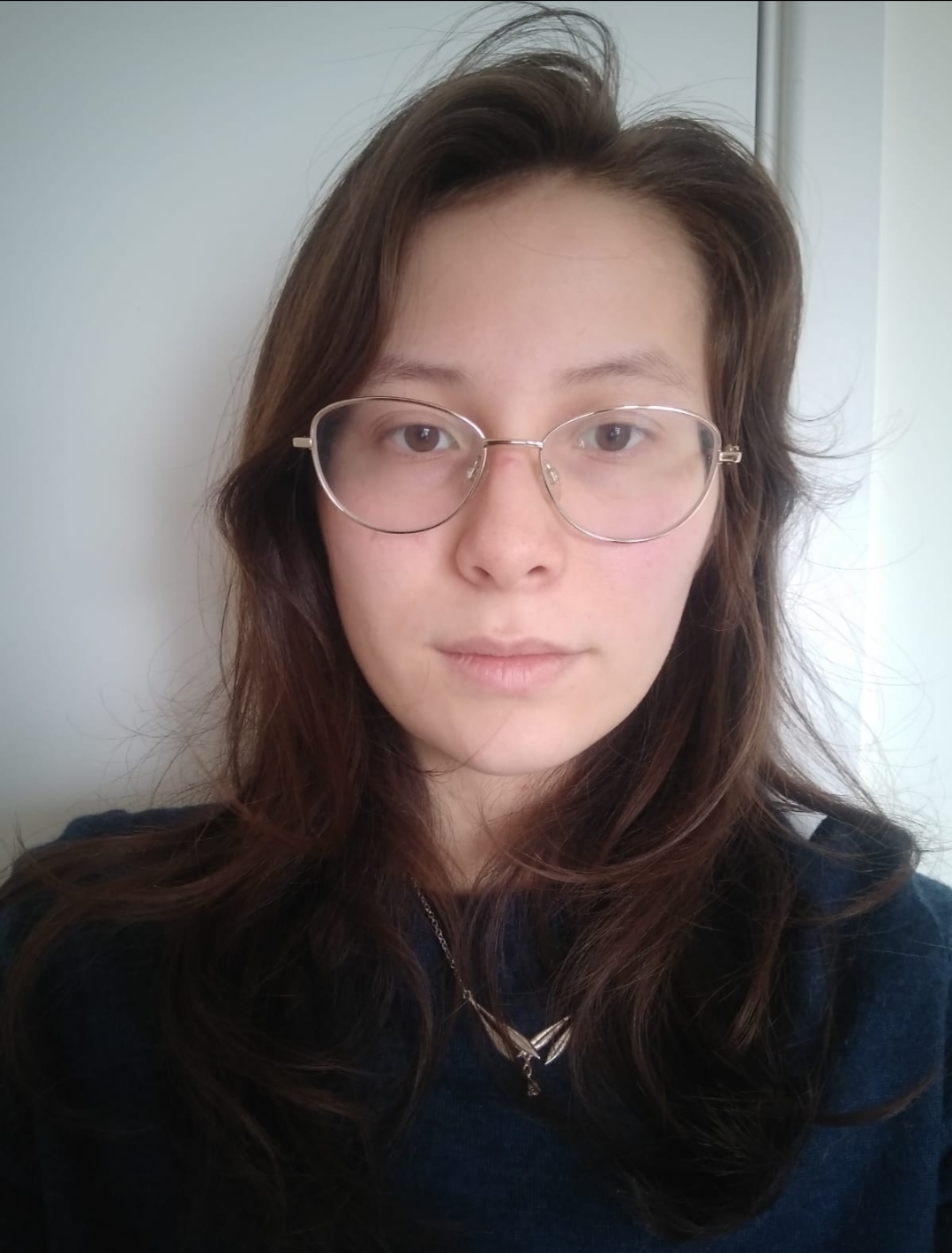
Lilian Luo (she/her), 2023-2027
From: Finland
Lilian's PhD project focuses on combining chemical models together with hydrodynamical and dust evolution models of protoplanetary disks. We aim to understand what are the unique chemical signatures of different origins of substructures in protoplanetary disks (such as planets vs. hydrodynamical instabilities). Lilian works with several ALMA observations that are publicly available to test her models.
Kan Chen (he/his), 2021-2025
From: China
Co-supervision with Dr. Mihkel Kama
Kan's PhD project focuses on understanding the feedback that an embedded planet can have on the disk temperature, and how this affects disk composition and interpretation from observations. In addition, Kan has investigated the observability of kinks in disks (or deviations from the Keplerian rotation) by performing 3D hydodynamical simulations. Results at:
Chen et al. (2024)
Chen & Dong (2025)
Chen et al. (2025, submitted to MNRAS).
Post-doctoral Researchers
Aníbal Sierra (he/his), 2024-2027
From: Guatemala
Aníbal is working on ALMA observations of protoplanetary disks and comparing these observations to models of dust evolution.
Fabiola Gerosa (she/her), 2024-2027
From: Italy
Fabiola will work on models of planet formation. She will join the group later in 2024.
Minjae Kim, 2024-2027
From: South Korea
Min will work on models and observations of disks, in particular from JWST.
Master Students
Jingy Ping (she/her), University of Leuven (Belgium) Mar. 2025 - Apr. 2026
Jingyi master's project focuses on performing gas evolution models including mild photoevaporation of the disks in UpperSco, to understand the disk fraction expected a different times of evolution, the gas disk masses and sizes; and the comparison with observations. For this, Jingyi is performing a population syntheis analysis using the publicly available code Dustpy.
Elias Belrhiti Alaoui (he/his), Oct. 2025 - Aug. 2025
Elias master's project focuses on understanding the properties of disks around free-floating planets, in particular the minimum disk mass of these disks by performing radiative transfer calculations.
Andrew Allan (he/his), Oct. 2023 - Aug. 2024
During his master's project, Andrew has performed dust evolution models to investigate how the interplay of icelines can affect particle trapping. His models have been applied to the PDS 70 disk and the Solar System's natal disk.
Wing Siu (she/her), Oct. 2022 - Aug. 2023
During her master's project, Wing performed radiative transfer models of protoplanetary disks to understand what are the best disk conditions to detect potential Lagrangian points produced by a newborn planet.
Wali Butt (he/his), Oct. 2022 - Aug. 2023
During his master's project, Wali performed radiative transfer models of protoplanetary disks to quantifyhow asymmetries and radial regions of high concentration of dust particles can affect the disk temperature and therefore the chemical reactions that can happen in the disk while the planets are forming.
Opportunities
There are different fellowships to support independent post-doctoral research in the UK, including funding from UKRI , the Royal Society , the Royal Astronomical Society , the Winton Fellowship , the Stephen Howking Fellowship , the 1851 Research Fellowships , and the Leverhulme Early Career Fellowship . If you are interested in applying to any of these and work in our work, please contact me.
A nice summary of available fellowships in the UK can be found in this UCL link.
Our Funding